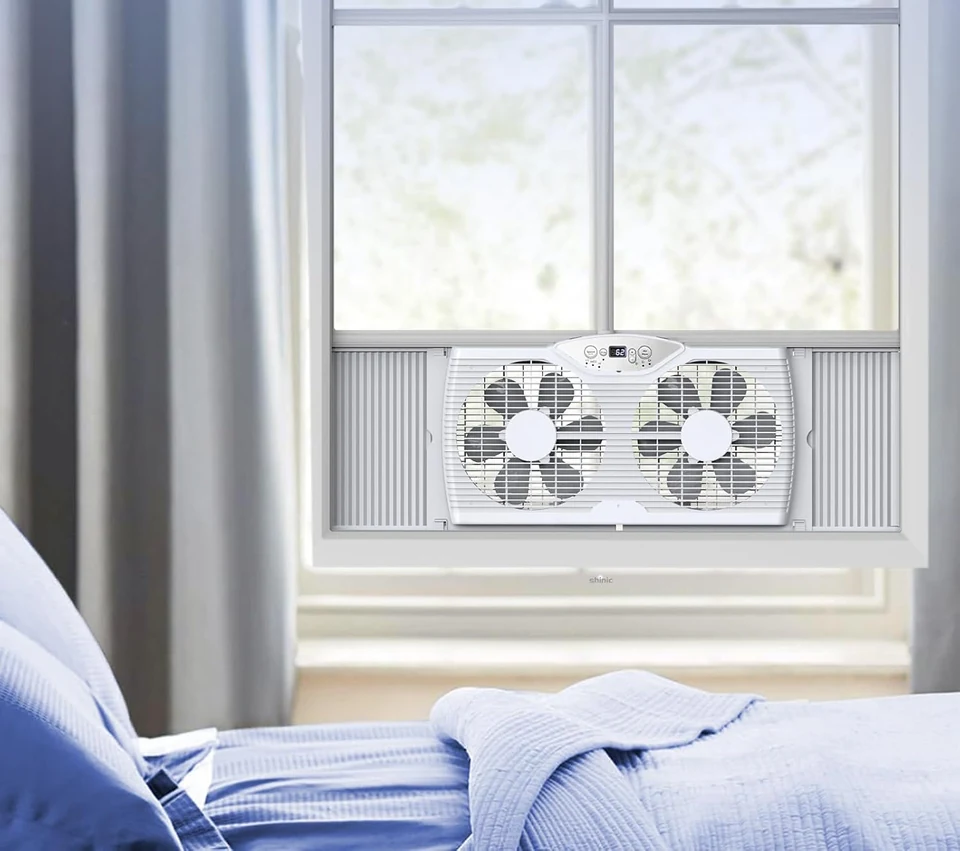
The right fan is the one that puts useful airflow where you spend time. A clear spot on a desk, a seat across the living room and an open window are three different jobs. Start with the job, then choose the shape. This guide helps you compare SHINIC tabletop, pedestal and window fans, measure their intended positions and make a practical placement plan before you buy.
Our range includes the BP-9B 9-inch tabletop box fan and the SP30-14R 14-inch folding pedestal fan, alongside dedicated window models. The smaller fan gives you a compact option for a stable surface. The pedestal format lets you plan airflow from a floor position. A window fan adds the separate question of moving air between indoors and outdoors. Each belongs in a different part of your room plan.
1. Decide what you want the airflow to do
Write down one sentence about the problem. “I want a breeze while I work at this desk” is more useful than “the apartment needs a powerful fan.” The first sentence identifies a person, a position and a daily activity. You can measure the space around that activity and decide whether a tabletop fan has a clear route to you. The second sentence leaves too many decisions open.
Separate personal airflow from ventilation. A circulating fan moves air within the room. A window fan can move air through an opening when it is installed and operated as its manual directs. Air movement across your usual seat and exchanging indoor air with outdoor air may both be useful, but they require different arrangements. Do not buy a tabletop fan expecting it to become a secured window appliance.
Also note whether you move between rooms. Someone who works at a desk in the morning and reads elsewhere in the evening may value an easy, safe relocation routine. Someone who always uses the same chair may prefer a dedicated placement. If you share the space, include the other person's preference. A strong breeze aimed across a shared sofa can be welcome to one person and irritating to another.
Choose the most frequent task first. You can then compare secondary uses without asking one appliance to solve every comfort problem in the home.
| Your priority | Format to consider | First thing to measure |
|---|---|---|
| Airflow beside a seated workspace | Tabletop box fan | Usable surface and clear path to your seat |
| Airflow from a floor position | Pedestal fan | Base footprint and surrounding walking space |
| Air exchange through a window | Dedicated window fan | Actual window opening and installation clearances |
| Lower indoor air temperature | Appropriate cooling equipment | Room conditions and cooling requirements |
2. Make a tabletop fan part of the workspace
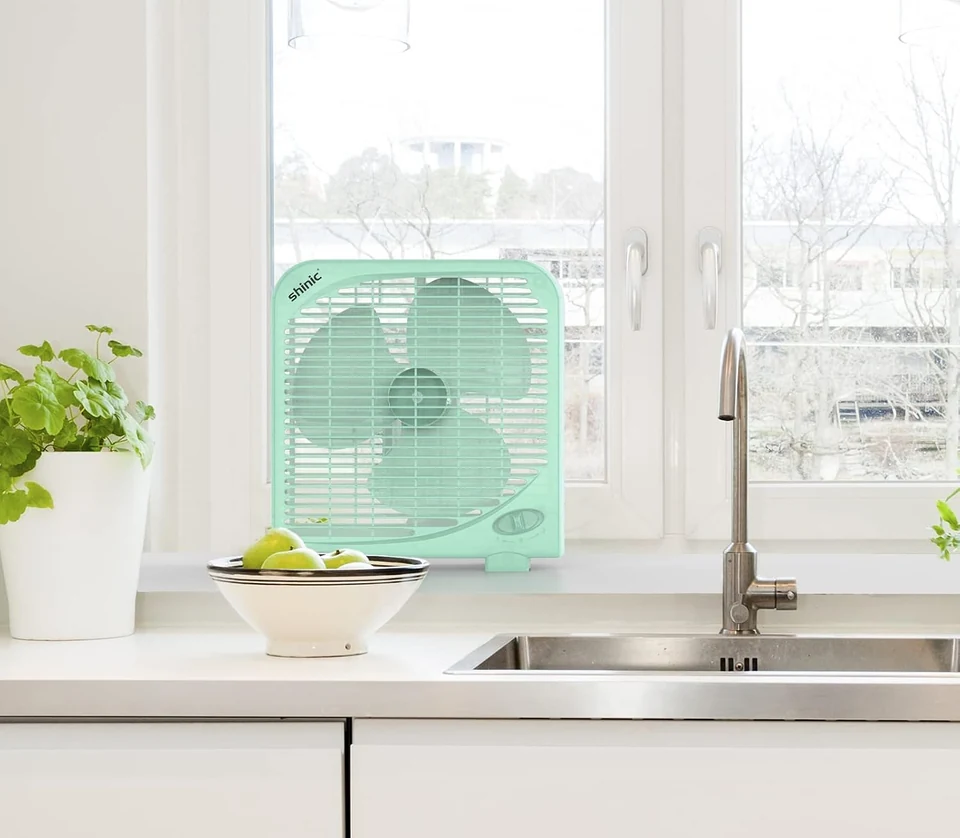
The SHINIC BP-9B is a 9-inch tabletop box fan offered in black, white and green. Its format is worth considering when you already have a suitable surface close to your chair. Choose the color after you have checked the location. A fan that matches your desk but leaves no room for a keyboard, notebook or mug will quickly become an inconvenience.
Look at the desk from your seated position. A monitor stand, document holder or stack of books may occupy the exact line where you expect air to travel. Moving those objects a few inches can make a placement more useful without increasing the speed. Keep the fan on a stable surface with its full base supported, and follow its manual for operating position and clearance.
Think through ordinary movements: reaching for a drawer, sliding the chair back, opening a laptop and setting down a drink. The fan and its cord should remain out of those movements. Keep liquids away from the appliance. If the only available space is precariously close to the edge, select a different location or reconsider a floor-standing format.
A useful first arrangement is beside the workspace with airflow directed toward the occupied area, without blowing directly through loose papers or into a microphone. Adjust within the model's permitted positions. The aim is comfortable airflow you can live with throughout the task, rather than a desk dominated by the appliance. Explore the SHINIC table fan collection to compare the current options.
3. Plan a pedestal fan around people and furniture
A pedestal fan makes sense when a table is unavailable or when a floor position better suits the room. The SHINIC SP30-14R 14-inch folding pedestal format gives you another way to organize the space around a reading chair, seating group or home workspace. Check the selected product's adjustment and folding instructions before deciding how it will fit your routine.
Measure more than the visible fan head. The base occupies floor space, and the cord needs a protected route to a suitable outlet. A narrow strip between a sofa and a doorway may look available until someone walks through it carrying a laundry basket. Keep regular routes clear, including the route you use when the room is dim.
Evaluate the fan from the position where you will sit. A sofa arm, high-backed chair or crowded coffee table can obstruct a floor-standing placement. Try drawing a line from the proposed fan position to the occupied area on a quick room sketch. That exercise often reveals a better location on the other side of a chair or farther along a wall.
If your chosen model has adjustable parts, turn it off before making adjustments and follow the manual. Secure the assembled configuration before use. A folding design should be operated only in an approved position, not balanced partway between storage and use. Compare the pedestal fan range with the available floor area before choosing by blade size alone.
4. Know when the window is the better starting point
A window fan solves a different placement question: where can air enter or leave? Begin with the window itself. Identify the opening style, measure the usable opening and check that the chosen fan's installation method applies to it. A window's overall frame size is not the same as the clear space available for the fan and its expanders.
Outdoor conditions matter. The EPA advises considering outdoor temperature and air quality before opening windows. Bringing hotter air or polluted air indoors does not become a good plan simply because the fan can move it. During extreme heat, follow local guidance and use effective cooling. A portable fan is not protection against dangerous indoor temperatures.
For ordinary ventilation planning, think about the rest of the route as well as the fan. A closed interior door or an obstructed opening can separate the window from the area you intended to ventilate. Observe the room with its normal furniture and doors in place, then decide which supported airflow mode suits the conditions.
Keep window security, screens and the manufacturer's weather instructions in the decision. Do not improvise a mounting system for a room fan or assume an insect screen supports an appliance. Our SHINIC window fan guide explains the measuring and model-selection process in more detail. Use the window fan collection when the main task is air exchange through a suitable opening.
5. Measure the usable space, not just the room
A room's length and width tell only part of the story. For placement, the small details around the appliance often matter more: how far a drawer opens, where a curtain hangs and which side of the chair you use to stand up. Make a simple sketch with the outlet, fan position and occupied area marked. Add the furniture that sits between them.
For a tabletop fan, measure the clear surface with your normal belongings in place. For a pedestal fan, mark the proposed base area using a piece of paper or another temporary marker, then walk through the room. For a window fan, measure according to its installation instructions. These are planning exercises, not substitutes for the selected product's dimensions and manual.
Check the cord route without stretching the cable across a walkway or trapping it behind furniture. Do not plan around a cord being just long enough when pulled taut. A location should allow the appliance to sit naturally and the cable to remain free from crushing, sharp edges and repeated movement.
Write down the measurements and take them to the product page. Comparing real measurements is easier than trying to remember whether a corner “looked about right.” Recheck the plan if you change the furniture arrangement, since a previously useful position can become crowded after a new desk or chair arrives.
| Measure or observe | Tabletop location | Pedestal location | Window location |
|---|---|---|---|
| Usable space | Full supported base area | Base footprint on a level floor | Clear opening specified by the manual |
| Obstructions | Monitor, papers, shelf | Sofa arms and furniture backs | Sash, handles, tracks and coverings |
| Daily movement | Drawers and chair movement | Doors and walking routes | Opening, closing and safe removal |
| Power route | Cable clear of desk mechanisms | Cable clear of foot traffic | Cable clear of moving window parts |
6. Use airflow and air conditioning for their different jobs
A circulating fan creates air movement; an air conditioner removes heat from indoor air. The Department of Energy explains that fans can improve personal comfort through moving air. That distinction helps you interpret what happens after switching a fan on. Feeling more comfortable does not necessarily mean the room thermometer will show a lower temperature.
In an air-conditioned room, start by making the fan useful at the occupied position. There is little value in directing its airflow into the back of a bookcase. Keep the room's cooling equipment operating according to its instructions and avoid blocking supply or return openings with the fan or its furniture.
Adjust one thing at a time. First find a useful fan position. Next choose a comfortable speed. Only then consider a small change to the cooling setting if everyone remains comfortable. This approach makes it easier to understand which change helped. It also avoids turning the fan to its highest setting and simultaneously changing the thermostat, then guessing about the result.
Do not treat a fan purchase as a promise of a particular electricity saving. Your habits, cooling system, climate and room all affect the outcome. Turn a personal circulating fan off when it is no longer serving an occupied space. In dangerously hot conditions, prioritize effective cooling and the EPA's heat guidance instead of trying more elaborate fan arrangements.
7. Balance one person's comfort with a shared room
Personal control is a useful part of fan selection. In a home office used by one person, you can make small changes without negotiating the whole room. In a living room, the same setting must coexist with conversation, television, reading and other people's preferences. Begin with where people actually sit rather than arranging the fan around an empty room.
Ask each person to describe what is uncomfortable. One person may want more airflow; another may simply be sitting in afternoon sun. Those are different problems. Moving a chair or adjusting a shade may solve the second without asking everyone to accept a stronger breeze. Keep the fan's role specific enough that you can judge whether it is helping.
For a shared sofa, compare possible positions from both ends of the seating area. A location that puts the fan close to one person may feel uneven across the group. If your selected model offers direction or movement adjustments, use only those provided by the manufacturer and evaluate the result in normal use.
Think about controls, too. The person who needs an adjustment should be able to reach the controls safely without stepping over a cord or leaning around moving parts. A clear, reachable arrangement is often more useful than an impressive-looking position in the far corner. Good placement respects how the room is occupied throughout the day.
8. Evaluate sound in the room where you use the fan
Sound matters differently during a video call, a meal or an afternoon of reading. Avoid comparing unsupported noise figures across models measured under different conditions. Instead, use the product information to understand the available controls and consider the tasks that happen in the intended room. Your own tolerance and surroundings are part of the decision.
For calls, position a tabletop fan so airflow does not blow directly into the microphone. Keep the appliance stable and check that nearby items are not rattling. A loose pen cup or a picture frame touching the housing can create an extra sound unrelated to the airflow you wanted.
Try the lowest useful setting before increasing it. If the airflow does not reach you, reconsider the obstruction or placement before assuming more speed is the only answer. A small change in position may make the same setting more useful, though the right result depends on the room and model.
New scraping, repeated clicking, a burning smell or unusual vibration is not something to solve by turning up music. Stop using the fan, unplug it and follow the manufacturer's support instructions. Never open a motor housing to investigate. For everyday comfort, evaluate the complete arrangement: where the fan sits, what surrounds it, what you are doing and whether the selected setting fits that activity.
9. Work through three realistic room plans
A compact desk beside a wall. Begin by clearing a stable area beside the monitor and checking where the chair moves. A BP-9B tabletop fan is a format to consider if the full base fits and the airflow has an unobstructed route. If the desk is already crowded, do not build a stack of books to create a stand. Review a suitable floor location instead.
A reading chair in a multipurpose living room. Identify a pedestal position outside the main route between the door and sofa. Check the view from the chair rather than from the doorway. The fan should not require furniture to be rearranged every time someone walks past. Keep your reading light, side table and charging cables in the sketch so the placement works with the whole corner.
A room with a suitable opening and cooler outdoor air. Start with a dedicated window model, opening measurements and the installation instructions. Consider outdoor air quality and how interior doors affect the intended route. A window fan can address air exchange while a room fan addresses personal airflow, but adding two appliances is not automatically necessary. Solve the main problem first.
These examples are planning situations, not measured performance tests or promises about coverage. In each one, the useful decision comes from the available position and daily activity. Your room may combine all three situations at different times.
| What you notice | What to check | Practical next step |
|---|---|---|
| Airflow misses your seat | Obstructions and permitted direction | Reposition safely and reassess |
| The desk feels crowded | Available supported surface | Consider a suitable pedestal location |
| A window fan seems unsuitable | Opening style and measured fit | Choose only a compatible installation |
| The room remains dangerously hot | Actual indoor conditions | Use effective cooling and heat-safety guidance |
10. Build cleaning into the placement plan
A good location should let you care for the fan without dismantling the room. Before choosing a permanent position, check whether you can reach the plug and remove the appliance safely. A fan wedged behind heavy furniture is harder to inspect and clean, so a slightly less hidden position may be the better long-term choice.
Switch off and unplug the fan before cleaning. Follow the selected model's manual for the surfaces and parts that may be cleaned and the methods allowed. Do not assume a removable-looking grille is intended for owner removal. Never immerse the motor housing or electrical parts, and do not spray cleaner into openings.
Look for dust during ordinary room cleaning and attend to it according to the instructions. The useful interval depends on the room, household and amount of use, so avoid treating a fixed calendar reminder as proof that inspection is unnecessary between dates. Check the cable and plug for visible damage while the fan is disconnected.
Store the manual with the model information so you can identify the correct instructions later. If you move the fan between rooms, repeat the placement check each time. A stable desk arrangement does not establish that a narrow shelf in another room is suitable. Care and placement work together: access, clear space and correct assembly make the fan easier to live with.
11. Make moving and storage straightforward
Seasonal storage starts with a clean, dry appliance and a complete set of parts. Keep removable components together and record how the fan was assembled. With a folding model, use the manufacturer's folding sequence and locking positions. Do not force a joint because it looks as though it should move farther.
Choose a dry storage space where the fan will not be crushed by other belongings. Avoid placing heavy boxes on the grille or wrapping the cable so tightly that it is strained at its entry point. Keeping the original packaging can be useful when it supports the appliance properly, but packaging does not excuse a damp or overloaded storage location.
Before bringing the fan back into use, inspect it and confirm that all necessary parts are present. Check the model's instructions again if you have forgotten the assembly sequence. Test the controls only after the fan is fully assembled and positioned correctly.
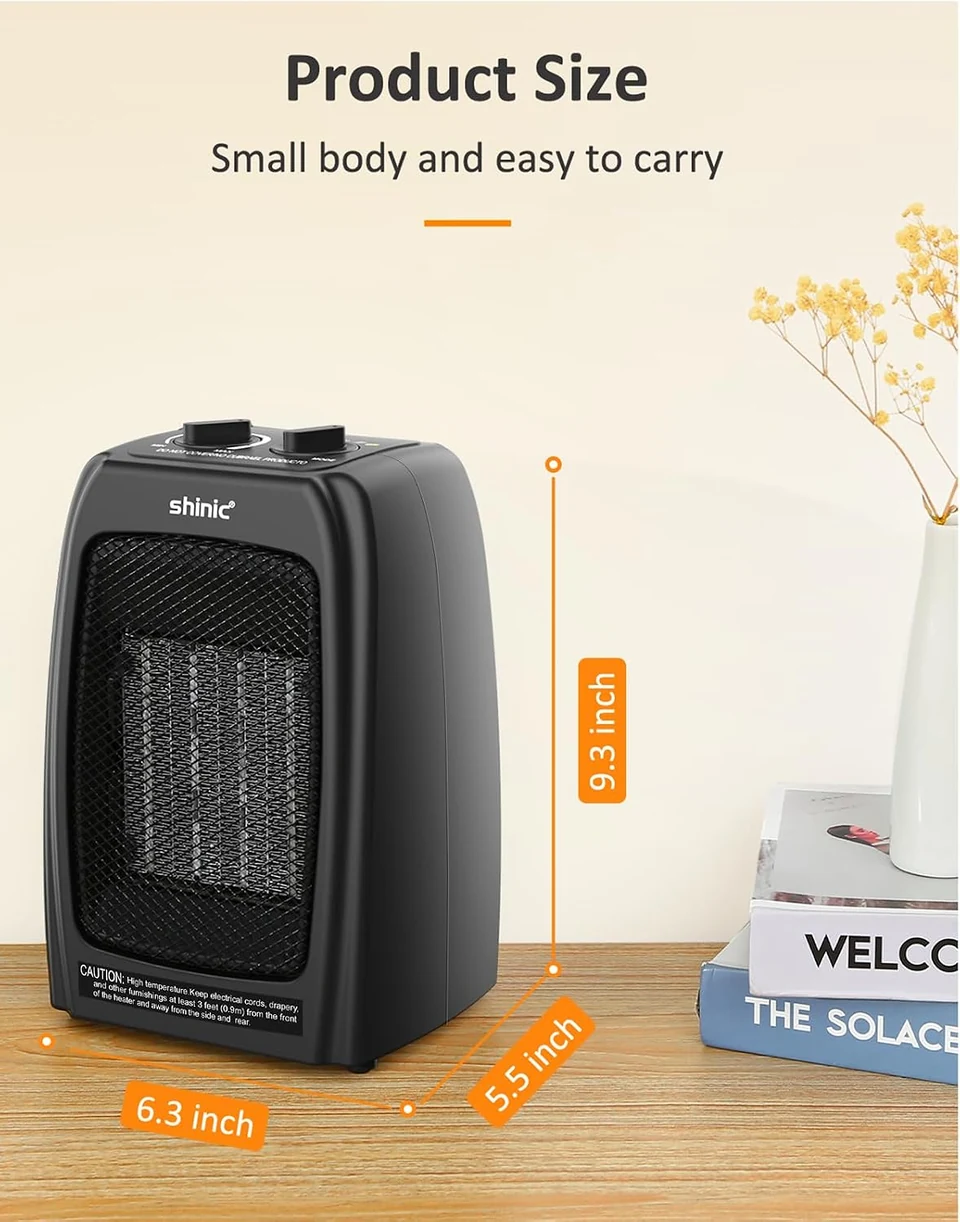
If your seasonal needs include supplemental warmth, treat that as a separate selection. A heater has different placement and electrical requirements from a fan. Our SHINIC space heater guide explains how to compare the heating formats and prepare a suitable location. Do not assume the convenient spot used for a summer fan is automatically safe for a winter heater.
12. Finish with a short, practical shortlist
By now you should have a clear task, a measured location and an understanding of the format that suits it. Keep your shortlist small enough to compare carefully. For each candidate, check the full dimensions, controls, operating positions, assembly requirements and power instructions on the current product page and in its manual.
Choose a tabletop format when a stable nearby surface supports the way you work or relax. Consider a pedestal when a clear floor position makes more sense. Choose a dedicated window fan when compatible installation and air exchange are the actual priorities. The best match is the one whose everyday setup is straightforward enough that you will use it correctly.
Finally, picture the complete routine: carrying the fan into place, plugging it in, adjusting it, walking past it and putting it away. A product that fits each of those steps is easier to recommend to yourself than one selected only for its largest number or boldest claim. Start with the relevant SHINIC collection, then return to your measurements before making the final choice.